

Hello from Athens
This week, Dr. Payne is working with world class athletes from all over the globe, treating acute and chronic sports medicine conditions and learning from physician colleagues. In addition, there was some touring.
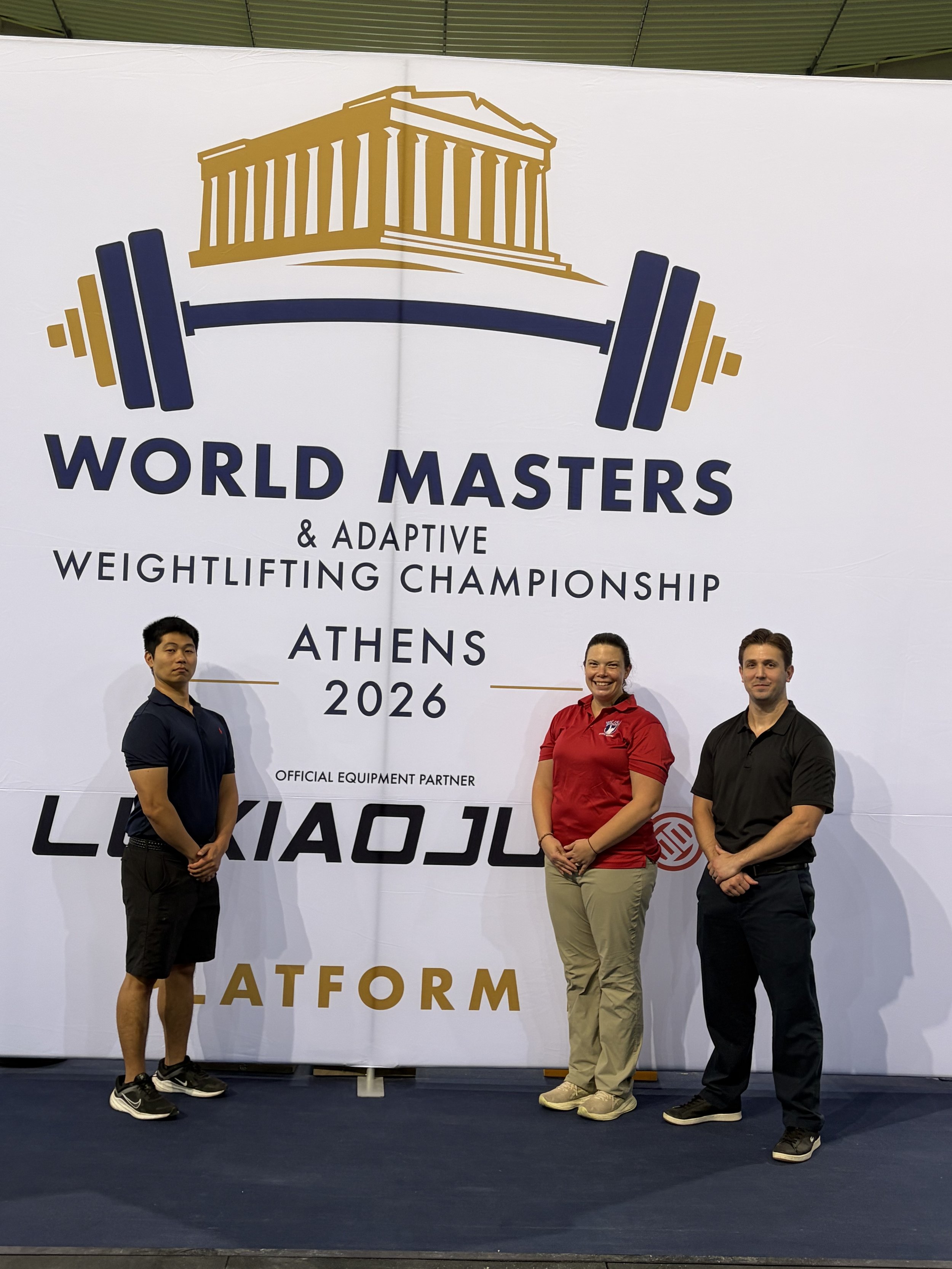
Dr. Kyle Lao, Dr. Jennifer Payne, and Dr. Chase Knowles at the World Masters Weightlifting Championships in Athens, Greece
Specifically, Dr. Payne was the physician for the IMWA World Masters Olympic Weightlifting Championships, in Athens, Greece (birthplace of sport!). Masters athletes are those athletes aged 35+, competing in categories based on body weight and age (every 5 years). The oldest lifter was 92, and there are about 1600 athletes!
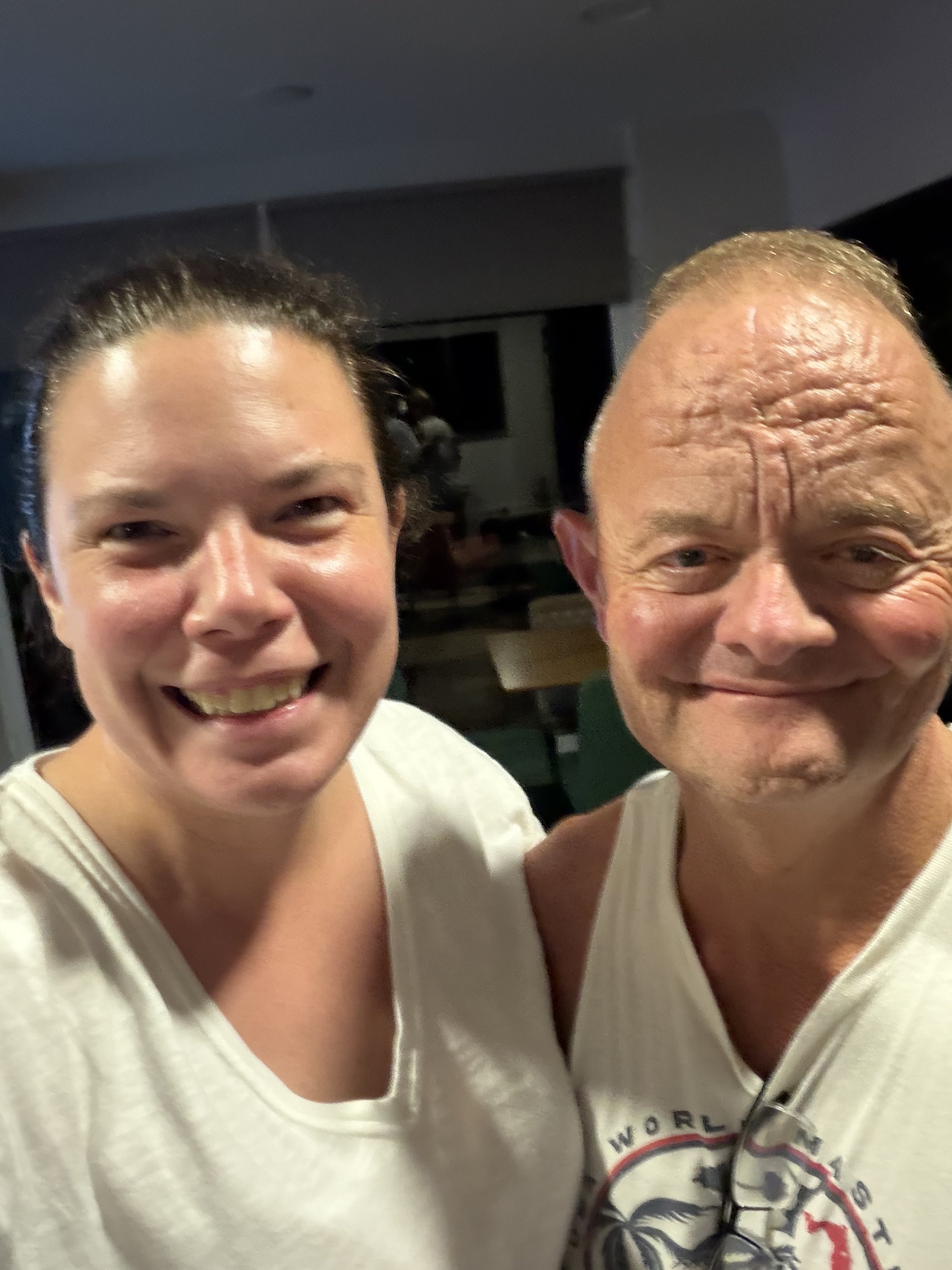
0100 hours Medical Director “Sign Out” - Dr. Jennifer Payne and Dr. Mark Lavallee, lead physician for World Masters Weightlifting and pioneer in the field of Ehlers Danlos research and diagnostic criteria. Dr. Lavallee was Dr. Payne’s fellowship director 2014-2015 - this is how she first learned about EDS and all the things that come along with it!
From Dr. Payne:
Volunteering at these championships serves as a great reminder of the scope of human potential and resilience. Seeing folks overcome injuries, amputations, and of course psychological hurdles to succeed in getting their personal best or making a total is SO inspiring. After covering European Masters in Waregem, Belgium in June, I got myself back in the gym as well. It also reminds me how many Olympic Weightlifting athletes are hypermobile!
We know that collagen plays a major role in Ehlers Danlos Syndromes, with faulty folding/incorrect function being the problem - “The Tissue is the Issue”. HOWEVER, while the collagen is the dominant tissue in tendons and ligaments (giving us these bendy bodies in EDS!), collagen is more just in the extracellular matrix in the muscles. Also, muscles almost always go across joints in order to actuate movement. This means, we can STRENGTHEN the muscles, and thus STABILIZE the joints.
Weightlifting is one of the best things folks with hypermobility can do to stabilise their joints, manage pain, and preserve function. We know that in the general populace, weightlifting preserves muscle mass, function, bone density, and - anecdotally - helps with trauma processing, self confidence, and community connections (if you are in a gym or weightlifting club).
One size does NOT fit all, and we know that what matters the most is MOVEMENT - keeping your body moving, regularly, outside, with other people. Social connections are as important as quitting smoking! Perhaps, a topic for another day.
What kind of movement do you like to do? “Blue sky”, what type of activity do you see yourself doing over the next few weeks, months, year? Looking down the road 20-30 years, what level of function, strength, relationships do you imagine for yourself?
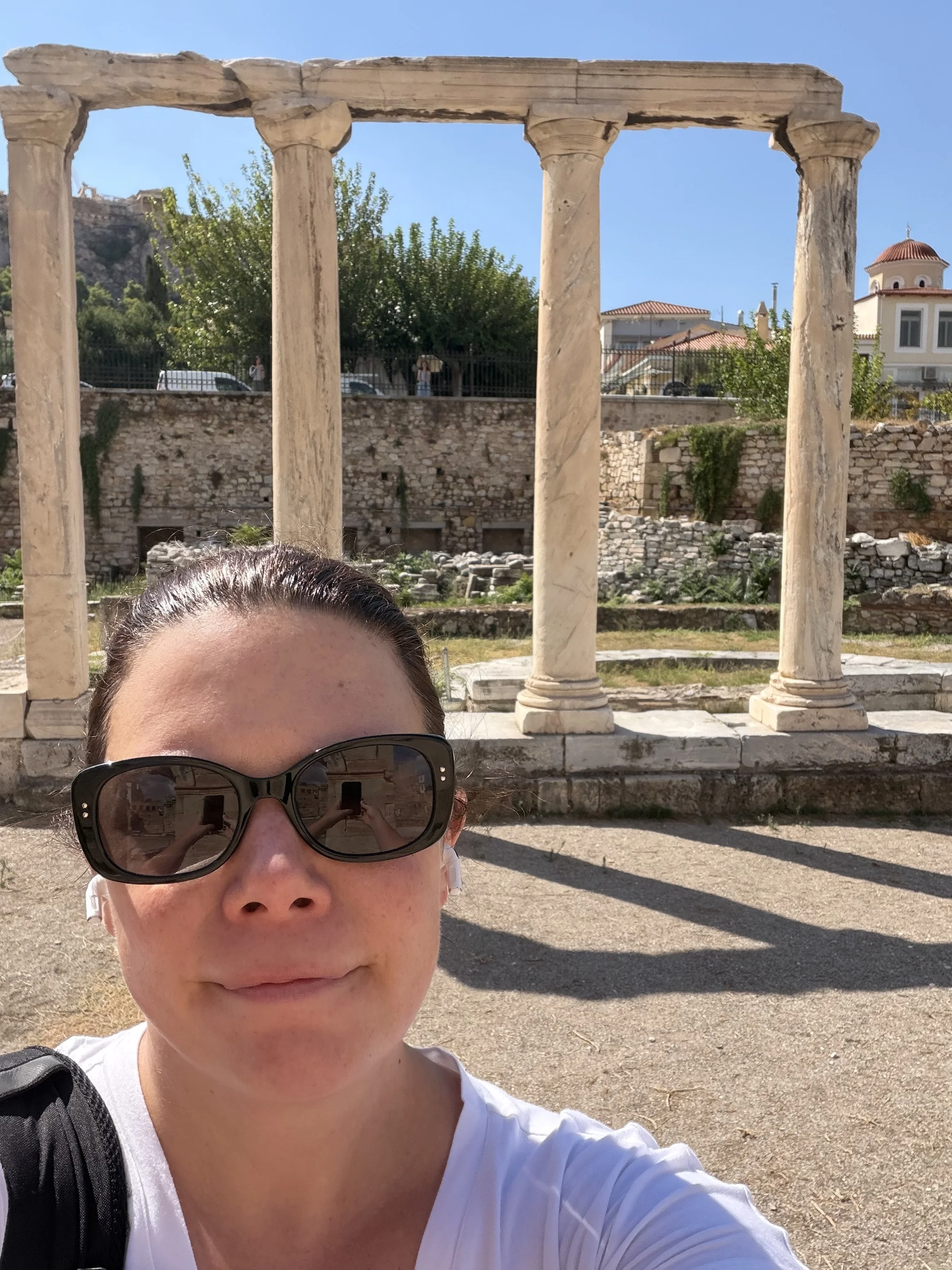
Visiting Hadrian’s Library in Athens, Greece
